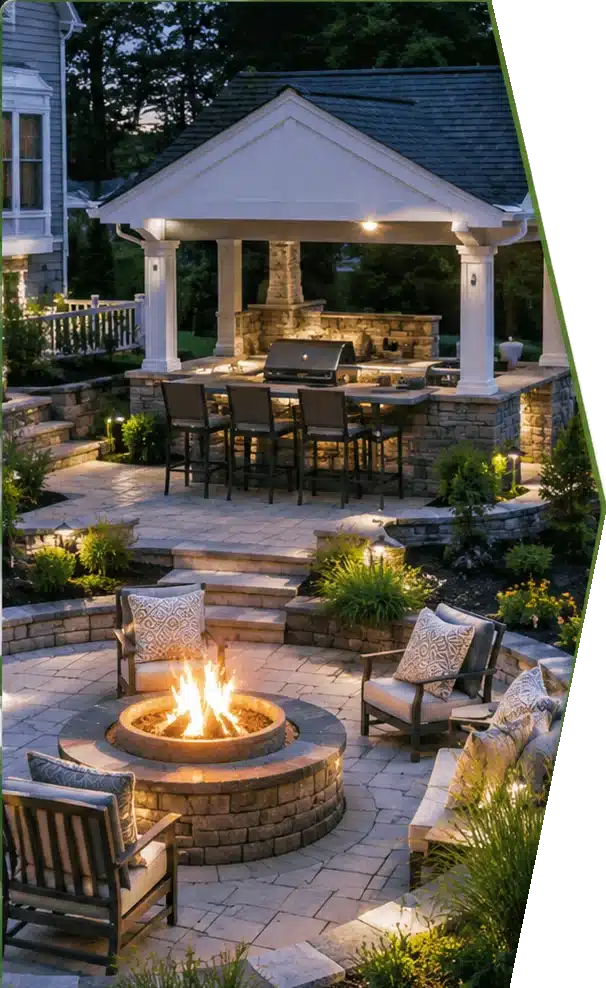
A well-designed patio can transform an ordinary backyard into a comfortable outdoor living area for relaxing, dining, entertaining, and spending time with family. Whether you are planning a simple patio installation or a more customized outdoor space, the right design, materials, and professional installation can make a significant difference in the appearance and long-term performance of your property. LCM Plus helps homeowners create attractive and functional outdoor spaces that complement their homes and landscaping.
Key Takeaways
- Patio design should match your home’s layout, landscape, and lifestyle.
- Material selection affects appearance, durability, maintenance, and cost.
- Proper site preparation and drainage are essential for a long-lasting patio.
- Patios can be customized with seating, fire features, lighting, and outdoor kitchens.
- Professional installation helps prevent common issues such as shifting, cracking, and drainage problems.
Why Invest in a Patio?
A patio provides more than an attractive area in your backyard. It extends your usable living space and gives you a dedicated place to enjoy the outdoors. A thoughtfully designed patio can become an outdoor dining area, entertainment space, relaxing retreat, or gathering spot for family and friends. It can also improve the overall appearance of your property by creating a natural connection between your home, landscaping, and backyard.
At LCM PLUS, patio projects are planned around the property and the homeowner’s needs. The goal is to create an outdoor space that looks natural, functions well, and provides lasting value.
How to Plan a Patio Installation
Before choosing materials or deciding on the shape of your patio, consider how you want to use the space. Your intended use will influence its size, layout, location, and features.
Determine How You Will Use the Space
Think about what activities will take place on your patio. A small seating area may only require enough space for chairs and a table, while a patio designed for entertaining may need additional room for dining furniture, grills, or an outdoor kitchen.
Common patio uses include:
- Outdoor dining
- Family gatherings
- Entertaining guests
- Relaxing and lounging
- Fire pit areas
- Outdoor cooking
Planning around your lifestyle ensures that the finished patio is useful rather than simply decorative.
Choose the Right Location
The location of your patio can affect accessibility, privacy, sunlight, drainage, and the overall appearance of your backyard.Many homeowners choose to position patios directly outside a rear entrance for convenient access. Others may prefer a patio farther into the yard to create a separate outdoor retreat. Consider existing trees, slopes, drainage patterns, landscaping, and the relationship between the patio and your home before finalizing the location.
Choosing the Right Patio Material
One of the most important decisions during patio planning is selecting the right material. Different materials offer different appearances, maintenance requirements, durability, and price points.
Concrete Patios
Concrete is a versatile option that can work well for a variety of outdoor designs. It provides a durable surface and can be customized with different finishes and patterns. Concrete can also create a clean, modern appearance that works well with contemporary homes and landscaping.
Brick Patios
Brick provides a classic appearance that can complement traditional homes and garden landscapes. Its individual pieces can be arranged in different patterns to create visual interest. Brick can also work well when homeowners want their patio to have a warm, established appearance.
Natural Stone
Natural stone creates a distinctive outdoor surface with natural variations in color, texture, and shape. It can provide an upscale appearance and blend beautifully with surrounding landscaping. Because natural stone options vary considerably, homeowners should consider both appearance and practical maintenance requirements when making their selection.
Paver Patios
Pavers are another popular choice because they are available in numerous shapes, sizes, colors, and patterns. A paver patio can be designed to complement the home’s exterior while creating a durable and attractive outdoor surface. One advantage of pavers is that individual units can often be replaced if they become damaged, rather than requiring the entire surface to be rebuilt.
Why Proper Site Preparation Matters
A patio may look simple once completed, but proper preparation underneath the surface is essential to its long-term performance. The installation process typically involves preparing the ground, establishing the appropriate base, creating proper grading, and ensuring water can drain away effectively.
Poor preparation can contribute to problems such as:
- Uneven surfaces
- Shifting materials
- Cracking
- Water pooling
- Weed growth
- Drainage problems
Professional installation helps ensure the foundation and surface are properly prepared before the finished material is installed. If your property already has masonry features that need attention, masonry restoration services can also help improve the condition and appearance of existing brick or stone surfaces as part of a larger outdoor improvement project.
Patio Design Ideas for Your Backyard
Your patio does not have to be a basic rectangular surface. Modern patio designs can incorporate different shapes, materials, levels, and features to create a more personalized outdoor environment.
Create an Outdoor Dining Area
If you enjoy eating outside, consider leaving enough space for a dining table and comfortable seating. Positioning the dining area near the house can also make it easier to carry food and drinks between the kitchen and patio.
Add a Fire Pit
A fire pit can make a patio more comfortable during cooler evenings and create a natural gathering point for family and guests. The fire feature should be positioned with safety, ventilation, furniture placement, and available space in mind.
Include Built-In Seating
Built-in benches and seating walls can provide additional seating without taking up as much floor space as large pieces of outdoor furniture. They can also help define different areas of a larger patio.
Add Outdoor Lighting
Lighting can improve both the appearance and usability of your patio after sunset. Pathway lights, accent lighting, and strategically placed fixtures can highlight landscaping and improve visibility around the outdoor area.
Consider an Outdoor Kitchen
For homeowners who regularly entertain, an outdoor kitchen can turn the patio into a complete entertaining area. Depending on the available space, this may include a grill, countertop, storage, or dining area.
Small Backyard Patio Ideas
A smaller backyard does not mean you have to sacrifice comfort or style. Careful planning can help make a compact patio feel functional without overcrowding the space.
Consider using:
- Compact outdoor furniture
- Built-in seating
- Vertical landscaping
- Smaller fire features
- Integrated lighting
- Simple paving patterns
Keeping the design clean and proportional to the property can make a small patio feel more spacious.
How Much Does Patio Installation Cost?
The cost of a patio installation varies from project to project. There is no single price because several factors influence the overall investment.
Important cost factors include:
Patio Size
Larger patios require more materials, preparation, and labor, which naturally increases the overall project cost.
Material Selection
Concrete, brick, natural stone, and pavers each have different material and installation costs. Choosing premium materials or custom patterns may increase the investment.
Ground Preparation
Properties with slopes, poor soil conditions, drainage concerns, or difficult access may require additional preparation before installation.
Custom Features
Fire pits, retaining walls, outdoor kitchens, seating walls, lighting, and other features can increase the overall project cost. A professional assessment is the best way to understand what your particular patio project will require.
Patio Maintenance Tips
One of the advantages of a properly installed patio is that it generally requires less routine maintenance than many other outdoor surfaces.
Simple maintenance can include:
- Sweeping away leaves and debris regularly.
- Washing the surface when necessary.
- Removing weeds between pavers.
- Addressing drainage problems promptly.
- Replacing damaged pavers when needed.
- Inspecting the surface for cracks or movement.
Regular care helps preserve the appearance of your patio and can prevent minor issues from becoming larger problems.
How Professional Patio Installation Adds Value
A professionally installed patio can improve more than the appearance of your backyard. It creates usable outdoor space that can make your property more enjoyable for everyday living and entertaining. Good design also helps ensure that the patio works naturally with existing landscaping, walkways, driveways, and other exterior features.
For larger exterior improvement projects, coordinating your patio with other hardscape elements can create a more cohesive appearance. An experienced driveway pavers contractor can help ensure that nearby paved areas complement the overall design of your property.
Choosing a Patio Contractor
The quality of installation is just as important as the materials you select. When comparing contractors, look for experience with outdoor construction, attention to site preparation, and an understanding of drainage and landscape integration. A good contractor should also take the time to understand how you plan to use the space before recommending a design. At LCM Plus, the focus is on creating outdoor improvements that balance functionality, appearance, and long-term performance.
Conclusion
A thoughtfully planned patio can become one of the most useful and enjoyable areas of your home. From choosing the right material and location to adding features such as fire pits, outdoor kitchens, lighting, and seating, there are many ways to create a patio that fits your lifestyle. Proper preparation and professional installation are essential for achieving a durable surface that looks great and performs well over time. Whether you are planning a simple backyard patio or a complete outdoor living area, LCM Plus can help turn your ideas into a practical and attractive space. Contact LCM PLUS today to discuss your patio project and explore options that fit your property, lifestyle, and budget.
Frequently Asked Questions
What Is the Best Material for a Patio?
The best patio material depends on your budget, preferred appearance, maintenance expectations, and property. Concrete, brick, natural stone, and pavers are all popular options.
How Long Does a Patio Installation Take?
The timeline depends on the patio size, material, site conditions, design complexity, and required preparation. A professional contractor can provide a more accurate timeline after assessing the property.
Does a Patio Require a Lot of Maintenance?
Most patios require relatively little routine maintenance. Regular cleaning, weed removal, drainage checks, and prompt repairs can help keep the surface in good condition.
Can a Small Backyard Have a Patio?
Yes. A small backyard can accommodate a comfortable patio when the design is properly scaled. Compact furniture, built-in seating, and efficient layouts can help maximize available space.
Can I Add Features to an Existing Patio?
Depending on the patio’s construction and available space, features such as seating, lighting, fire elements, or landscaping can often be incorporated or added later.


Ready to Transform Your Outdoor Space?
Whether you’re planning a new patio, custom outdoor kitchen, landscape renovation, paver driveway, or complete backyard transformation, LCM Plus is here to help.
Contact us today to schedule your consultation and start designing the outdoor space you’ve always envisioned.