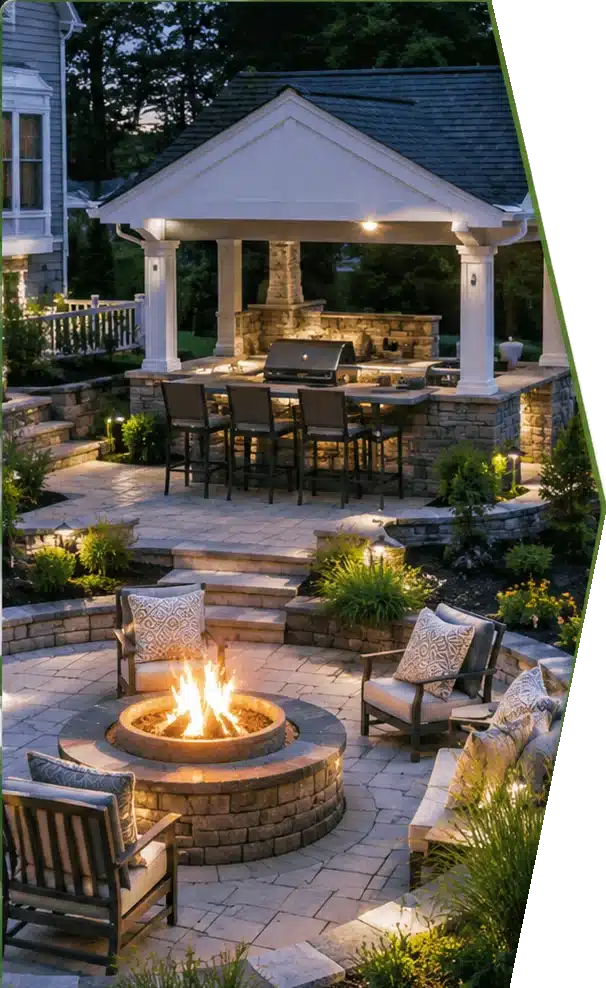
Pavers vs bricks is a common question when planning a new patio, walkway, or outdoor living area. Both materials can create a beautiful and durable surface, but they have different looks, costs, and design options. If you are deciding between a brick patio and a paver patio, understanding these differences can help you choose a material that fits your home and lifestyle.
For homeowners planning a complete outdoor project, the choice should also work with existing hardscape materials, landscaping, masonry, and other features around the property.
Key Takeaways
- Pavers offer more choices in colors, shapes, sizes, and patterns.
- Brick provides a classic and timeless appearance.
- Both materials can work well for patios and walkways.
- Pavers can make individual repairs easier.
- The right choice depends on your home’s style, budget, maintenance needs, and outdoor design.
Pavers vs Bricks: What Is the Difference?
Pavers and bricks are both individual pieces that can be installed to create outdoor surfaces. However, they differ in material, appearance, and design flexibility. Traditional brick is usually made from fired clay, while pavers can be made from concrete, natural stone, and other materials. The installation method can also vary based on the project. Both materials need a stable base, proper drainage, and careful placement to create a surface that performs well over time. LCM Plus focuses on thoughtful outdoor design and professional installation to help create durable, attractive spaces. For homeowners comparing the two, the biggest differences usually come down to appearance, design choices, maintenance, and cost.
What Are Pavers?
Pavers are individual pieces used to build patios, walkways, driveways, and other outdoor surfaces. They come in many sizes, shapes, textures, and colors, which makes them a flexible choice for landscape projects.
Concrete pavers are especially common because they offer a wide range of styles. Natural stone is another option for homeowners who want a more natural and upscale appearance.
Pavers can also be arranged in different patterns. This allows the design to match the style of the home rather than making the outdoor surface look like a separate feature.
What Are Brick Pavers?
Brick pavers are made from clay that is shaped and fired. Their warm colors and familiar texture give them a traditional appearance that works well with many home styles.
A brick patio can be a great choice for homeowners who want a timeless outdoor space. Brick also works well around gardens, older homes, and landscapes with traditional features.
Unlike some modern paver options, brick usually has a more limited color range. However, this simple appearance is part of its appeal. The natural variation in brick can add character without making the design feel too busy.
Pavers vs Bricks for Patios
When comparing pavers vs bricks for a patio, think about how you want the finished space to look and feel. Both can create a comfortable area for outdoor dining, seating, entertaining, or relaxing.
A paver patio gives you more freedom to choose the size, color, texture, and pattern. This makes it easier to create a custom design. Brick, on the other hand, creates a more traditional and familiar appearance.
Your choice should also fit the rest of the property. A patio that matches nearby walkways, walls, landscaping, and the home’s exterior will usually feel more natural.
Which Is More Durable?
Both pavers and bricks can provide long-lasting performance when installed on a properly prepared base. The quality of the installation plays a major role in how well the surface handles everyday use. This is especially important for a residential paver driveway, where the surface must support regular vehicle traffic and changing weather conditions. Pavers have one useful advantage when repairs are needed. Since the surface is made from individual pieces, a damaged paver can often be removed and replaced without rebuilding the entire patio or driveway.
Brick can also be repaired by replacing individual pieces. However, finding an exact match may be more difficult on older patios where the original bricks have changed color over time.
Which Offers More Design Options?
Pavers generally offer more design flexibility than traditional brick. They are available in different sizes, shapes, colors, and textures. This makes them a good choice for homeowners who want to create a custom outdoor design.
For example, large-format pavers can create a clean and modern appearance, while smaller pieces can be arranged in classic patterns. Different colors can also be used to create borders or accents.
Popular design options include:
- Herringbone patterns
- Running bond layouts
- Basket weave patterns
- Contrasting borders
- Mixed colors
- Large format layouts
Brick can also be installed in patterns, but its overall appearance tends to remain more traditional.
Which Material Is Easier to Maintain?
Both materials need basic maintenance to stay attractive. Regular sweeping can remove leaves and dirt, while occasional cleaning can help prevent stains from becoming permanent. Weeds may grow between the joints of either material, especially when the surface is not maintained. Keeping the joints clean and replacing joint material when needed can help keep the patio looking neat.
Pavers can be convenient when repairs are needed because individual pieces can usually be removed. With brick, individual damaged pieces can also be replaced, although matching older brick may take more effort. Simple maintenance usually includes regular cleaning, weed removal, checking for uneven areas, and repairing damaged pieces when necessary.
Pavers vs Bricks: Which Costs More?
There is no single answer because the total cost depends on the project. The size of the area, selected material, design, site conditions, base preparation, labor, and drainage can all affect the final price.
A simple brick design may have different costs than a detailed paver layout. Likewise, premium pavers or natural stone can increase the overall investment. When planning a patio installation, it is better to look at the complete project cost rather than comparing material prices alone. A professional can assess the site and provide a more accurate estimate based on the actual work required.
How Does Installation Affect the Final Result?
The quality of installation is just as important as the material you choose. A beautiful paver or brick patio can develop problems if the base is weak or drainage is not handled properly. The installation process generally begins with measuring and preparing the area. The existing surface may need to be removed before the ground is excavated and prepared. A stable base is then installed and compacted before the bricks or pavers are placed.
The surface also needs the right slope so water can move away from the patio. Proper joint material and edge restraints can help keep individual pieces in place. For this reason, professional installation can make a significant difference in the appearance, stability, and lifespan of an outdoor surface.
Pavers vs Bricks: Which Works Better With Natural Stone?
Both materials can be combined with natural stone to create a more detailed landscape design. Stone can be used for borders, steps, walls, or accent areas around the patio.
For example, a paver patio with a natural stone border can create contrast while keeping the main surface easy to maintain. Brick can also pair well with stone when the colors and textures complement each other. The key is to avoid using too many competing materials. A simple combination of two or three materials often creates a more balanced outdoor space.
Pavers vs Bricks for Walkways
Both pavers and bricks can work well for walkways. The best choice depends on the style of your home and the look you want to create. Pavers can be useful for curved paths or modern designs because they come in many shapes and sizes. Brick works well for straight garden paths and traditional entryways.
Think about how the walkway connects with the rest of your property. The material should complement nearby planting beds, patios, retaining walls, steps, and other landscape features. A well-designed walkway should feel like a natural part of the landscape rather than an isolated path.
Which Is Better for a Traditional Home?
Brick often works especially well with traditional homes. Its warm tones and classic appearance can complement colonial, historic, and other traditional architectural styles. A brick patio can also create a welcoming transition between the home and garden. Simple brick patterns can provide plenty of visual interest without requiring many different materials.
That does not mean pavers cannot work with traditional homes. Choosing warm colors and classic patterns can give pavers a similar feel while providing more design choices.
Which Is Better for a Modern Home?
Pavers are often a strong choice for modern homes because they can create clean lines and simple layouts. Large-format pieces in neutral colors can give patios and walkways a more contemporary appearance. Gray, beige, charcoal, and other neutral shades can work well with modern architecture. A simple pattern can also keep the outdoor area looking clean and uncluttered.
For a modern outdoor space, consider using fewer colors and focusing on the relationship between the paving surface, landscaping, lighting, and furniture.
How Do You Choose the Right Material?
The best material is not always the one with the lowest price or the most design choices. Your decision should be based on how you plan to use the space and what you want the finished project to look like.
Consider your home’s architecture, the size of the area, your budget, and how much maintenance you are willing to handle. You should also think about whether the new surface needs to connect with existing masonry or landscaping. If you are planning a larger outdoor project, choosing materials as part of one overall design can help create a more consistent result.
Pavers vs Bricks: Which One Should You Choose?
If you want maximum design flexibility, pavers may be the better option. Their wide selection of colors, shapes, textures, and sizes makes it easier to create a customized outdoor space. Since weather and seasonal conditions can affect outdoor surfaces, proper care is also important for protecting your outdoor hardscape over time. Brick may be the better choice if you prefer a classic appearance with warm, natural colors. It can add character to traditional homes and garden areas. Ultimately, the right choice depends on your home’s style, maintenance needs, and overall outdoor design.
In simple terms, consider pavers when you want:
- More design flexibility
- Different sizes and patterns
- Modern or traditional styles
- Easy individual replacements
Consider brick when you want:
- A classic appearance
- Warm and natural colors
- A traditional outdoor design
- A simple, timeless look
There is no universal winner. The right choice depends on the property, project goals, and personal preference.
Conclusion
When comparing pavers vs bricks, there is no one material that works best for every outdoor space. Pavers provide more choices in size, color, texture, and pattern, while brick offers a warm and classic appearance. If you are ready to create a beautiful new patio, walkway, or outdoor living space, contact LCM Plus today to discuss your project and find the right solution for your home.
Frequently Asked Questions
Are pavers better than bricks?
Pavers offer greater design flexibility and a wider range of colors, shapes, and patterns, while brick provides a classic and timeless appearance. The right choice depends on your home’s style, budget, and specific project requirements.
Is a brick patio cheaper than a paver patio?
Not necessarily. The overall cost depends on several factors, including the material selected, patio size, design complexity, site preparation, and installation labor.
Which lasts longer, brick or pavers?
Both brick and pavers can provide long-lasting performance when properly installed and maintained. Factors such as the quality of the base, drainage, installation, and ongoing maintenance can significantly affect their lifespan.
Are pavers easier to repair?
Yes. One advantage of pavers is that individual damaged pieces can usually be removed and replaced without having to rebuild the entire surface. This can make repairs more convenient and cost-effective.
Can brick and pavers be used together?
Yes. Brick and pavers can be combined to create attractive borders, accents, pathways, or defined sections within the same outdoor space. Using both materials can add visual interest and complement your home’s exterior.
Which is better for a patio?
Pavers are an excellent choice if you want greater design flexibility, while brick works well for homeowners who prefer a traditional and timeless look. Consider your budget, maintenance expectations, style preferences, and project requirements when making your decision.


Ready to Transform Your Outdoor Space?
Whether you’re planning a new patio, custom outdoor kitchen, landscape renovation, paver driveway, or complete backyard transformation, LCM Plus is here to help.
Contact us today to schedule your consultation and start designing the outdoor space you’ve always envisioned.