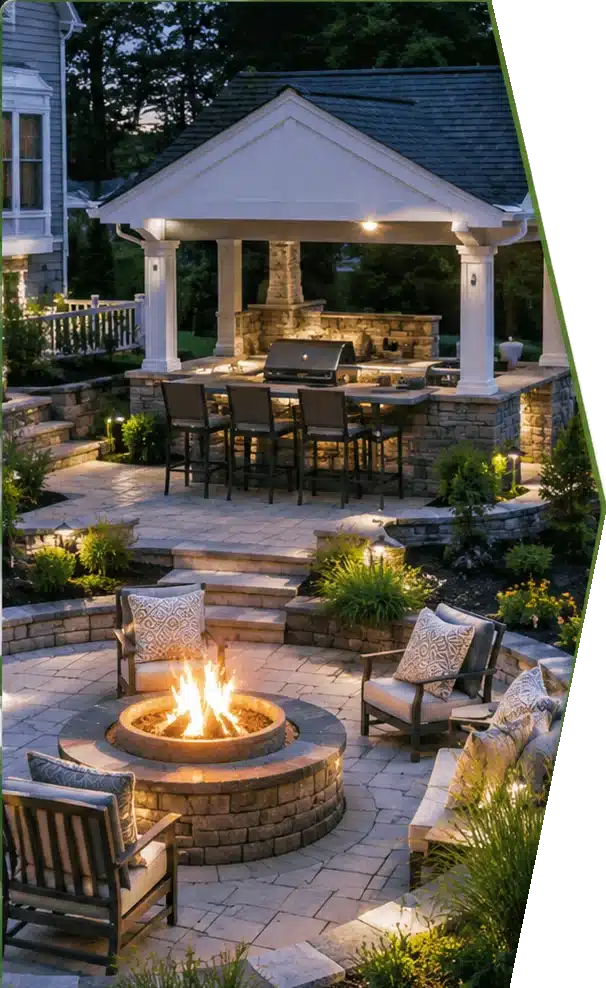
Front landscaping ideas can completely change the way your home looks from the street. A well-planned front yard can make the entrance feel more welcoming, improve curb appeal, and create a better connection between your home and the surrounding landscape. From simple front yard plants to a full front yard makeover, small design choices can make a big difference.
For homeowners working with LCM Plus, the goal should be more than adding plants at random. Good landscape design considers the home’s style, walkway, entry, planting areas, lighting, and long-term maintenance.
Key Takeaways
- Choose plants that fit your home’s style and local growing conditions.
- Use layers of plants to create depth around the front of your home.
- Make the walkway easy to see and comfortable to use.
- Use foundation planting to soften the edges of the house.
- Add trees, shrubs, flowers, and mulch for texture and color.
- Keep plant size and growth in mind before planting.
- Connect the front yard with the home’s entry and overall landscape design.
1. Start With a Clear Front Yard Plan
Before choosing plants or changing the layout, look at the whole front yard. Think about what visitors see first, where people walk, and which areas need the most attention. A clear plan can prevent the yard from looking crowded or uneven. Start by looking at the home’s shape, windows, front door, driveway, and existing plants. These features can guide the placement of new beds and walkways.
A good plan should consider:
- Home architecture
- Sun and shade
- Soil and drainage
- Existing trees
- Walkways and driveway
- Plant growth
- Maintenance needs
This simple planning step can make a landscape renovation easier and help you avoid costly changes later.
2. Create a Welcoming Entry
The front entrance is one of the most important parts of your landscape. It is where guests arrive and where your home’s outdoor design meets the interior. A well-designed entry can make the property feel warm and inviting. Use plants, lighting, containers, or a defined walkway to draw attention toward the front door. The design should guide visitors naturally without making the space feel crowded.
For a welcoming entry, consider:
- Low shrubs near the walkway
- Seasonal flowers near the door
- Path lighting
- Decorative planters
- A clear path to the entrance
The best entry landscaping feels natural and works with the home’s architecture.
3. Use Foundation Planting Around the Home
Foundation planting can soften the hard lines of a house and help it blend into the landscape. Shrubs and smaller plants placed near the foundation can add color and texture while creating a smooth transition between the building and yard. However, plants should not be placed too close to walls, windows, or utility areas. Always consider the mature size of each plant rather than its size when you buy it.
Good foundation planting should:
- Frame the house
- Leave windows visible
- Provide year-round interest
- Allow space for maintenance
- Avoid blocking doors and paths
A balanced planting bed usually looks better than a long row of identical shrubs.
4. Choose Front Yard Plants for Your Space
Choosing the right front yard plants is one of the most important parts of a successful landscape. Plants should fit the amount of sunlight, soil conditions, moisture, and space available in your yard. Think about how each plant will look throughout the year. Some plants provide flowers, while others add foliage, structure, or seasonal color.
When selecting plants, consider:
- Mature size
- Sun requirements
- Water needs
- Flowering season
- Winter appearance
- Maintenance needs
Native and well-adapted plants can often be a smart choice because they are suited to local growing conditions. The University of Minnesota Extension also recommends matching plants to site conditions such as light, soil, and moisture when planning a landscape.
5. Add Layers for More Visual Interest
A flat planting bed can look plain, even if it contains healthy plants. One simple way to add depth is to use different plant heights. Place taller plants toward the back, medium shrubs in the middle, and smaller plants along the front edge. Outdoor lighting and audio installation can then enhance the space after dark by highlighting planting beds, pathways, and key landscape features, making the front yard more inviting day and night.
This creates depth and helps the landscape look fuller without needing too many plants.
A simple planting layer might include:
- Small trees at the back
- Taller shrubs in the middle
- Low shrubs in front
- Perennials near the edge
- Ground cover around open areas
Layering also helps create a more natural transition between your home, planting beds, and lawn.
6. Improve Your Walkway
A walkway does more than help people reach the front door. It can become an important design feature in the yard. Good walkway ideas should balance function, safety, and appearance. A straight path can create a clean and direct route. A gently curved walkway may feel softer and work well with a natural landscape. The best layout depends on the home’s design and how people already move through the space.
Consider adding:
- Pavers or natural stone
- Low plants along the edges
- Landscape lighting
- Defined borders
- A wider landing near the entrance
The walkway should remain easy to use in every season.
7. Add a Small Tree for Structure
A small tree can become a strong focal point in a front yard. It can add height without overwhelming the house when the right species and location are selected. Before planting, check the mature height and width of the tree. Also consider overhead wires, sidewalks, driveways, underground utilities, and nearby structures.
A well-placed tree can provide:
- Height and structure
- Seasonal interest
- Shade
- Wildlife value
- A stronger connection to the landscape
Trees should be planned as long-term features. The small tree you plant today may become a major part of the yard later.
8. Add Color With Seasonal Flowers
Flowers are an easy way to add color to a front yard. They can highlight the entrance, brighten planting beds, and change the look of the landscape throughout the year. Instead of filling every space with flowers, use them as accents. A few well-placed groups can have more impact than a crowded planting bed.
You can create seasonal interest by combining plants that bloom at different times. This keeps the landscape changing as the seasons move from spring to summer and fall. For a balanced design, combine flowers with shrubs, grasses, trees, and ground covers.
9. Use Mulch to Finish Planting Beds
Mulch can give a planting bed a clean and finished appearance. It can also help cover bare soil and make the space around plants easier to maintain. A neat mulch bed creates a clear transition between plants and lawn. This can make the entire front yard look more organized.
When using mulch:
- Keep it away from tree trunks.
- Avoid piling it against the home’s foundation.
- Maintain an even layer.
- Refresh it when needed.
- Keep walkways and driveways clear.
Mulch should support the landscape design rather than become the main visual feature.
10. Add Landscape Lighting
Landscape lighting can improve both the appearance and usability of your front yard after sunset. It can highlight trees, plants, walkways, steps, and architectural details. Lighting does not need to be bright everywhere. A few well-placed fixtures can create depth and guide visitors toward the entrance.
Useful lighting locations include:
- Along walkways
- Near steps
- Around entry areas
- Under trees
- Near planting beds
- Around architectural features
Keep the lighting subtle. The goal is to make the landscape easier to see while keeping the overall look comfortable.
11. Use Hardscape Materials With Plants
Plants are only one part of a front landscape. Hardscape materials such as pavers, natural stone, retaining walls, and edging can give the yard structure. A paver walkway can create a clear route to the front door, while stone can define planting beds or add a visual border.
The key is to connect hardscape and planting areas. Landscape lighting can also highlight walkways, planting beds, trees, and other features after dark. Learn more about landscape lighting & audio and how it can enhance an outdoor space.
12. Make the Driveway Part of the Design
The driveway often takes up a large portion of the front yard, so it should not be treated as a separate feature. Its edges can be softened with planting beds, low shrubs, or a defined border. If the driveway is being replaced, consider how its color and material will work with the walkway and front entrance.
For example, a paver driveway can create a strong connection between the driveway and walkway. Planting along the edges can soften the hard surface and make the entrance feel more welcoming.
13. Create a Balanced Front Yard Makeover
A front yard makeover does not always require removing everything and starting again. In many cases, a few carefully chosen updates can create a major improvement. Start with the areas that have the biggest visual impact. The front entrance, walkway, planting beds, and driveway are often good places to focus.
A simple makeover might include:
- Updating overgrown shrubs
- Adding fresh planting beds
- Improving the walkway
- Adding new mulch
- Installing landscape lighting
- Planting a small tree
- Creating a cleaner lawn edge
The goal is to improve the entire view rather than focusing on one small area.
14. Match the Landscape to Your Home
Your front yard should complement your home’s architecture. A modern house may look better with clean lines, simple plant groups, and limited colors. A traditional home may work well with layered shrubs, flowering plants, and curved planting beds. Look at the home’s exterior colors before selecting plants and hardscape materials. This can help create a more connected appearance.
Think about:
- Exterior colors
- Roof style
- Windows
- Front door
- Building shape
- Existing materials
When the landscape and house work together, the result usually feels more intentional.
15. Keep Maintenance in Mind
A beautiful landscape can become difficult to manage if the design requires more work than you can handle. Before adding plants, think about watering, pruning, mowing, leaf cleanup, and seasonal care. Choose plants based on the amount of time you want to spend maintaining the yard. Grouping plants with similar water needs can also make care easier.
A lower-maintenance design can still look attractive. The key is to use the right plants in the right places and avoid overcrowding.
16. Improve Curb Appeal With Simple Details
Curb appeal comes from the way all the outdoor elements work together. A neat lawn alone may not be enough if the walkway is hidden or the planting beds are overgrown. Small changes can often make the front of a home look more polished.
Focus on:
- Clean lawn edges
- Healthy plants
- A visible front door
- Clear walkways
- Fresh mulch
- Simple lighting
- Balanced planting beds
These details may seem small, but together they can create a noticeable improvement.
17. Consider a Professional Landscape Renovation
Some front yard projects are simple enough to handle over a weekend. Others involve grading, drainage, large trees, masonry, irrigation, or major planting changes. A larger landscape renovation benefits from careful planning. A professional can look at the whole property and help create a design that considers both appearance and function. This can be especially useful when several parts of the yard need to be updated at the same time.
Professional planning can help with:
- Plant selection
- Walkway design
- Drainage
- Grading
- Masonry
- Planting layouts
- Lighting
- Overall landscape flow
This approach can reduce the chance of making changes that need to be redone later.
Front Landscaping Ideas: Which Ones Make the Biggest Difference?
The best front landscaping ideas are not always the most expensive ones. A clear walkway, healthy plants, clean planting beds, and a welcoming entrance can make a strong difference. Start with the areas that visitors notice first. Then build the design around those features. This keeps the project focused and helps avoid adding too many unrelated elements.
For a strong front yard design, focus on:
- A welcoming entrance
- Balanced foundation planting
- A clear walkway
- Seasonal color
- Clean lawn edges
- Simple outdoor lighting
- Plants suited to the site
Conclusion
The best front landscaping ideas combine beauty with function. You do not need to completely rebuild your yard to make a difference. Thoughtful planting, a clear walkway, foundation planting, seasonal color, lighting, and well-planned hardscape can all improve the appearance of your home.
Start by looking at the areas that need the most attention. Then choose plants and materials that fit your home’s style, site conditions, and maintenance needs. A well-planned design can improve curb appeal while creating a more welcoming entrance for your family and guests. Ready to give your front yard a fresh new look? Contact LCM Plus today to plan your landscaping project.
Frequently Asked Questions
What are the best front landscaping ideas?
Some of the most effective ideas include layered planting beds, foundation shrubs, a clear walkway, seasonal flowers, small trees, landscape lighting, and clean lawn edges.
How can I improve my front yard without spending too much?
Start with simple updates such as trimming overgrown plants, adding mulch, defining lawn edges, planting a few colorful flowers, and improving the entrance.
What plants are best for the front yard?
The best plants depend on your climate, soil, sunlight, and available space. Choose plants that fit the site and will not outgrow the area.
What is foundation planting?
Foundation planting uses shrubs, flowers, grasses, and other plants around the base of a home. It helps soften the home’s edges and connect the building with the landscape.
How can landscaping improve curb appeal?
A clean lawn, healthy plants, attractive walkways, balanced planting beds, and a welcoming entrance can make a home look more attractive from the street.
Should a walkway be straight or curved?
Both can work. A straight walkway gives a direct and formal look, while a gentle curve can create a softer and more natural feel.


Ready to Transform Your Outdoor Space?
Whether you’re planning a new patio, custom outdoor kitchen, landscape renovation, paver driveway, or complete backyard transformation, LCM Plus is here to help.
Contact us today to schedule your consultation and start designing the outdoor space you’ve always envisioned.