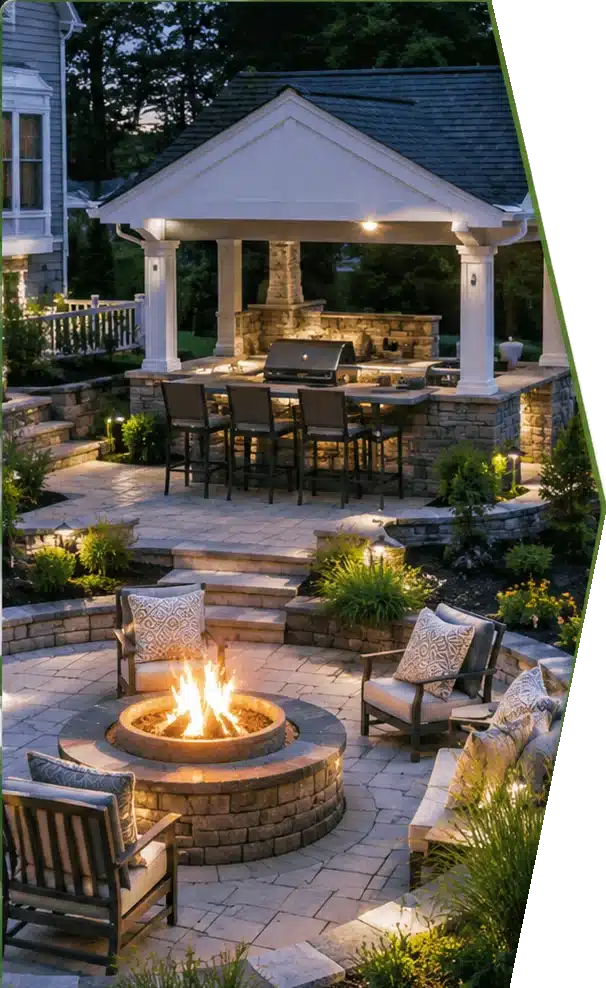
The best landscape lighting can completely change how your property looks and feels after sunset. It can make a walkway easier to use, bring attention to trees and plants, and give your outdoor space a warm, inviting feel. At LCM PLUS, lighting can be part of a well-planned outdoor design that fits the home, landscape, and way the space is used.
What Makes the Best Landscape Lighting?
The best landscape lighting creates a balance between function and appearance. It should help people see where they are going without making the property look too bright. It should also highlight parts of your landscape that you want people to notice. Good lighting design starts with the property itself. The size of the yard, location of trees, walkways, steps, walls, and entrances all affect where fixtures should go. Instead of placing lights randomly, think about how the entire space will look at night.
Start With How You Use Your Outdoor Space
Before choosing fixtures, think about what you want to do outside after dark. Your lighting needs may be different if you often entertain guests, spend time with family, or simply want better visibility around your home. Some areas may need practical light, while others only need a soft glow. Making this decision first can help you avoid buying too many fixtures or putting lights in places where they are not needed.
Improve Safety Around Walkways and Steps
Dark paths and steps can be difficult to navigate. A misplaced step or uneven surface can become harder to see when there is little natural light. Pathway lighting can provide a clear visual guide around walkways, entrances, steps, and other areas where people move. The fixtures do not need to be extremely bright. They simply need to provide enough light to make the route easy to follow. Good placement matters. Lights should guide people without shining directly into their eyes.
Use Outdoor Lighting to Add Curb Appeal
Your landscape can look very different once the sun goes down. Trees, shrubs, stone features, and architectural details that stand out during the day can become hidden without proper lighting. Well-planned outdoor lighting can bring those details back into view. It can also create a more welcoming appearance from the street. For example, a few carefully placed lights near a large tree may create more visual interest than several bright fixtures spread across the entire yard.
Highlight Trees and Plants
Plants have shapes, textures, and colors that can look beautiful at night when they are lit correctly. Lighting can bring out the structure of a large tree or add depth to a garden area.
When planning garden lighting, consider the size and shape of your plants. Smaller fixtures may work well for shrubs, while larger trees may need stronger lights placed farther away. Also think about future growth. Plants can change the way light reaches an area as they become larger.
Choose LED Lighting for Efficiency
Lighting may run for several hours each evening, so energy use is worth considering. Modern options can provide good brightness without requiring excessive power. LED landscape lights are often used for outdoor projects because they are available in different sizes, brightness levels, and color temperatures. They can work for paths, trees, walls, entrances, and other landscape features.
However, the light itself is only one part of the system. Fixture quality, wiring, placement, and controls also affect how well the installation works.
Add Depth With Accent Lighting
Lighting every part of your yard equally can make the space look flat. A better approach is to create different levels of light. Accent lighting can draw attention to one specific feature. This could be a mature tree, stone wall, planting bed, fountain, or another feature that deserves attention. The idea is to guide the eye. You want certain areas to stand out while others remain softer and less noticeable.
Make Your Backyard More Comfortable
Your backyard does not have to become a bright space just because you want to use it at night. In fact, softer lighting can often make an outdoor area feel more relaxing. Backyard lighting can help define areas for dining, sitting, walking, or entertaining. Different levels of light can make these spaces feel separate without the need for physical barriers. If you spend a lot of evenings outside, consider where you sit and where people move. These areas should receive enough light without creating unnecessary glare.
Add Lighting for Security
Lighting can also help improve visibility around your property. Entrances, gates, driveways, side paths, and other access points may benefit from additional illumination. Security lighting should be planned carefully. Extremely bright lights are not always the best choice. Strong glare can make it harder to see areas around the light. Motion sensors and timers can also help control when certain lights operate. This can provide useful illumination while avoiding unnecessary lighting throughout the night.
Think About Light Direction
The direction of a fixture can change the entire effect. A light pointed directly toward someone’s eyes can feel uncomfortable. A light aimed at a tree or wall can create a softer and more interesting effect. Try to think about where the light will be seen from. This includes views from the street, inside the home, seating areas, and walkways. The goal is to illuminate the feature, not the eyes of the people looking at it.
Choose the Right Light Color
Light color can affect the mood of an outdoor space. Warm light often creates a relaxed and comfortable appearance. Cooler light can provide a cleaner and more modern feel. There is no single color that works for every property. Your home’s exterior, plants, stonework, and personal style should all be considered. It can also help to keep the color consistent. Using several different light colors in a small area may make the landscape look disconnected.
Plan Lighting Around Existing Landscaping
Lighting should work with the landscape instead of fighting against it. Trees, plants, retaining walls, walkways, and other features can all affect fixture placement. If you are already working with landscaping contractors near me, discuss lighting before the landscape work is finished. This gives the design team a better chance to hide wiring, position fixtures properly, and avoid placing lights where future plants may block them. Planning ahead can also reduce the need to move fixtures later.
Consider Outdoor Entertainment Features
Outdoor spaces are often designed for more than simple landscaping. Homeowners may want comfortable seating, music, cooking areas, and lighting for evening use. An outdoor audio installation can be planned alongside the lighting system when entertainment is an important part of the space. Keeping these features in mind during the design stage can help create a cleaner and more organized outdoor area. The key is to make each feature feel like part of the same overall design.
Avoid Over lighting Your Property
One of the easiest mistakes is adding too many fixtures. More light does not always create a better result. When every tree, plant, path, and wall is brightly lit, there may be no contrast between different areas. The landscape can lose the natural feeling you wanted to create. Instead, choose a few important areas and give them the right amount of attention. Softer areas between brighter features can make the entire landscape feel more balanced.
Common Mistakes to Avoid
- Using too many fixtures
- Choosing excessive brightness
- Creating glare near windows
- Ignoring future plant growth
- Mixing too many fixture styles
- Forgetting about maintenance
Choose Fixtures That Match Your Home
Outdoor fixtures come in many shapes and finishes. While the light itself is important, the fixture should also fit the style of your property.A simple fixture may blend into a traditional landscape, while a more modern design may suit a contemporary home.
Try not to choose fixtures based only on how they look in a product photo. Think about how they will appear when installed among plants, stone, grass, and other landscape elements.
How to Plan Your Landscape Lighting
You do not need to know every technical detail before speaking with a professional. Start by walking around your property after dark. Look at areas that feel too dark and features that disappear once the sun goes down. Then think about where you would like more visibility and where you want to create visual interest.
A Simple Planning Process
- Walk around the property after sunset.
- Mark dark paths and steps.
- Choose landscape features you want to highlight.
- Decide where people spend time outdoors.
- Think about brightness and light color.
- Discuss the plan with a lighting professional.
Why Good Lighting Design Matters
A landscape lighting system should look natural, not forced. When the placement is right, you may notice the landscape more without immediately noticing the fixtures. That is a sign of thoughtful design. The lighting supports the property instead of becoming the main attraction.Good planning can also make your outdoor space easier to use. Walkways become clearer, seating areas feel more welcoming, and important landscape features remain visible after dark.
Final Thoughts
The right landscape lighting can make your property feel safer, more comfortable, and more attractive after sunset. The key is to focus on purpose rather than simply adding more fixtures. Ready to improve your outdoor space with the right lighting? Contact LCM PLUS today to discuss your landscape lighting project and create a plan that fits your home.
Sure, only the FAQ content has been changed. The existing HTML/CSS structure and FAQ schema format are kept intact.
Frequently Asked Questions
Can outdoor lights stay on all night?
They can, but it is often better to use timers or motion controls so lights operate only when needed.
How far apart should outdoor light fixtures be?
The spacing depends on the fixture type, brightness, and area being covered. Proper spacing helps prevent dark gaps and overly bright spots.
Can outdoor lights handle rain and moisture?
Yes, fixtures designed for outdoor use are built to handle weather conditions. Always choose products with an appropriate outdoor rating.
Do outdoor lights attract insects?
Some brighter lights can attract insects. Softer, warmer bulbs may help reduce this issue around frequently used areas.
Can outdoor lighting increase home value?
A well-planned setup can improve the appearance and usability of a property, which may make the home more appealing to potential buyers.


Ready to Transform Your Outdoor Space?
Whether you’re planning a new patio, custom outdoor kitchen, landscape renovation, paver driveway, or complete backyard transformation, LCM Plus is here to help.
Contact us today to schedule your consultation and start designing the outdoor space you’ve always envisioned.